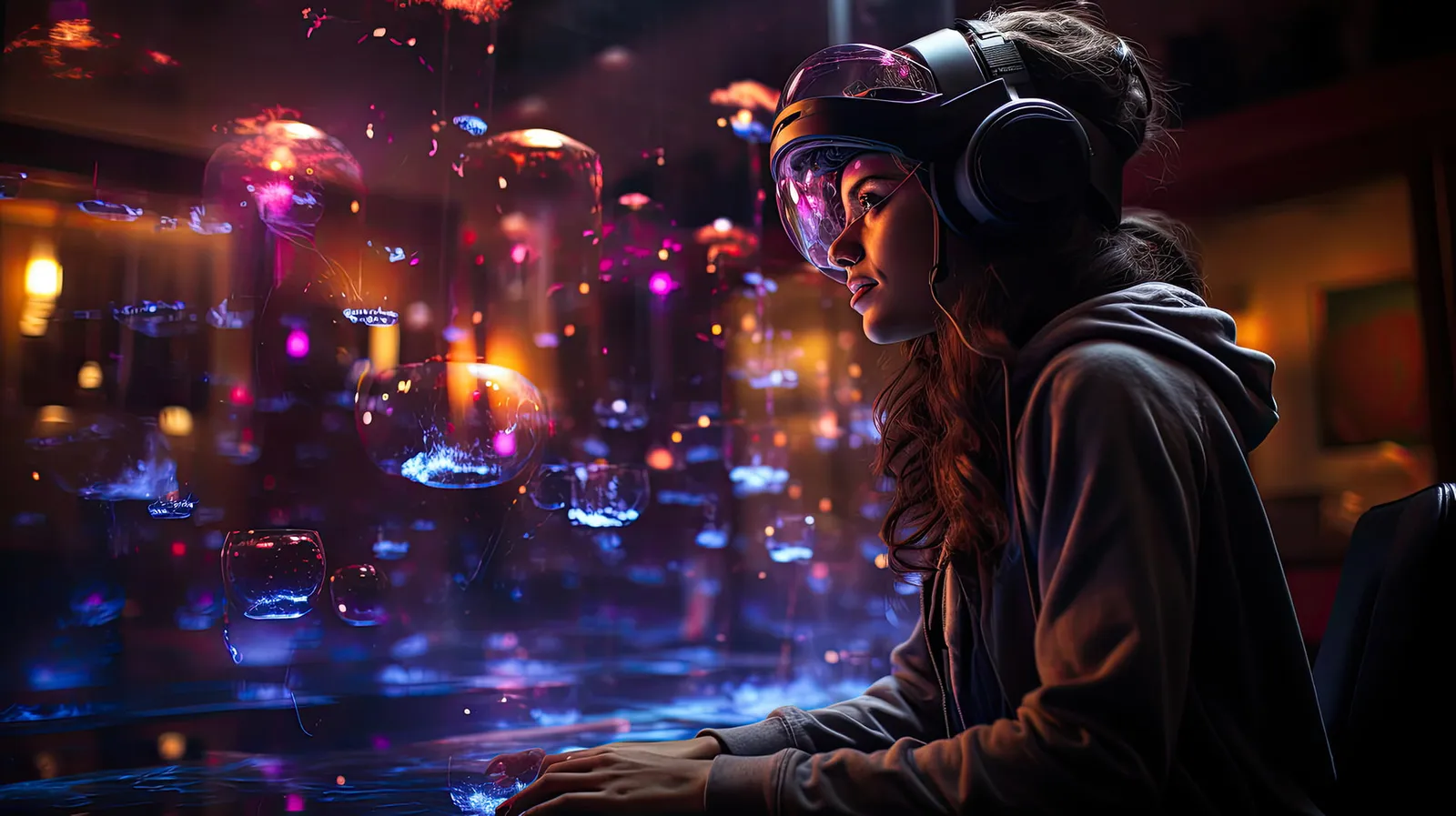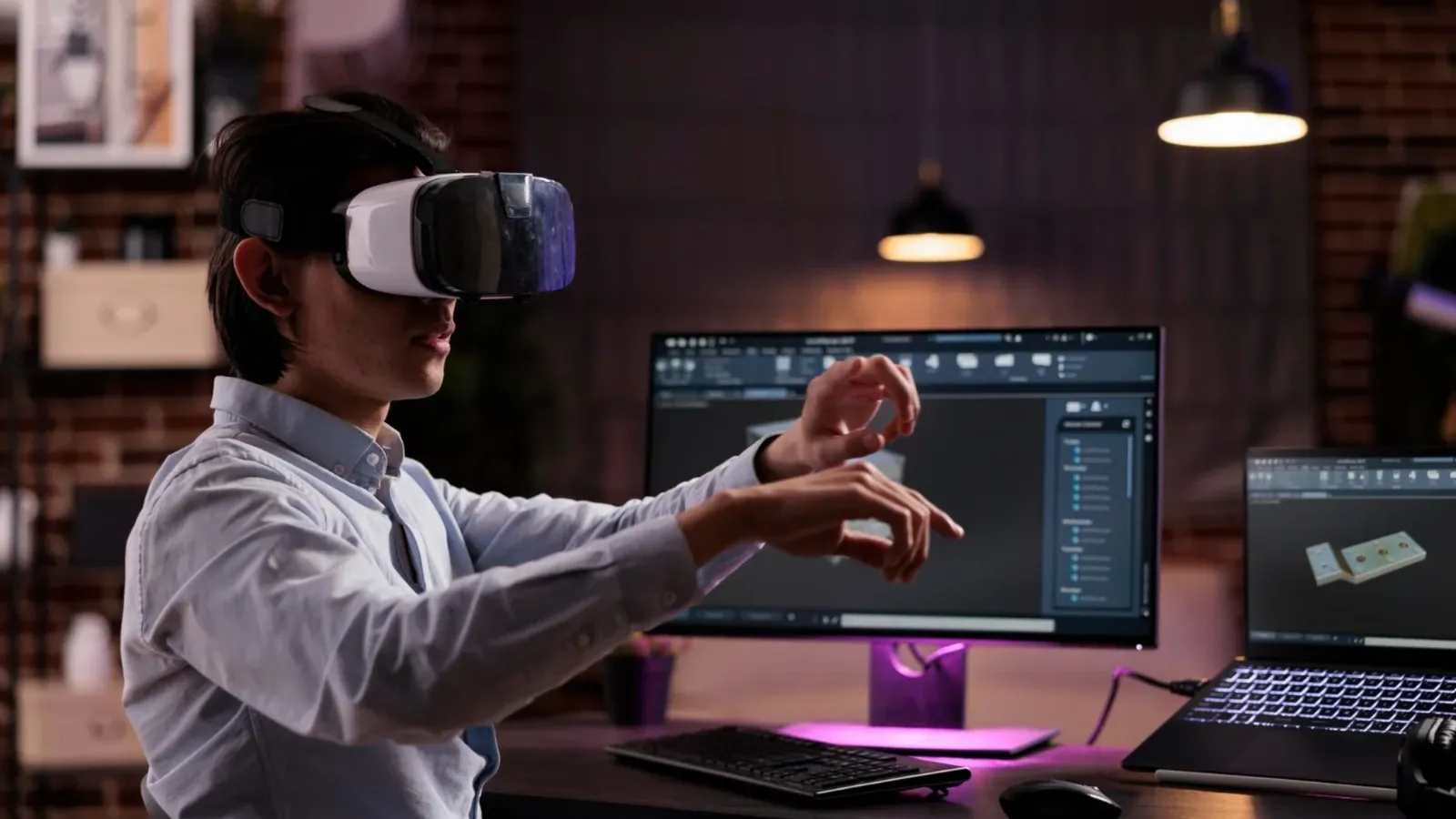
Since all businesses are trying to find ways to delight customers, improve efficiencies, and create a lasting digital experience, web-based technologies are a must. To reach customers, businesses should leverage other options like Augmented Reality (AR) and Virtual Reality (VR) instead of websites and mobile applications. AR/VR creates an experience like no other and captures the user’s imagination, providing both the business and customer a memorable experience.
With Professional AR/VR Development Services, you can have your idea turned into reality and tap into the power of the digital experience to boost customer experience, employee training and education, product visualization, and business growth. AR and VR offer exciting new opportunities for the modern enterprise across all industries – from healthcare and retail to education, real estate, gaming, and more.
In this blog, we will discuss how AR and VR are developed, business use cases, key advantages, and the importance of choosing the right AR and VR development company.
What are AR and VR Technologies?
While we hear the terms Augmented Reality and Virtual Reality interchangeably, there are differences.
AR is the application of an overlay of digital information onto the natural environment- this could include 3D models, animation, visuals, and information. This is viewable by smartphones or tablets or through an AR-enabled device.
A furniture retailer can help shoppers picture a coffee table or sofa in their living room without requiring a visit to the store.
Virtual Reality (VR) is an entirely computer-generated environment that the user interacts with via VR headsets and VR-compatible controllers. The possibilities of Virtual Reality Technology are endless and can be used for training, simulations, virtual tours, and of course entertainment.
Both technologies help companies to provide content in more interactive formats and improve client engagement with digital content for clients and employees.
How AR/VR Development Services Help Modern Businesses
You don’t have to have a game or entertainment obsession to use augmented reality and virtual reality. Companies in a variety of sectors are using augmented reality and virtual reality to tackle real issues and make their products and services better.
Some important use cases include:
1. Shopping & E-commerce Experiences
AR development can benefit my business by providing a virtual try-on and product preview for my business. Online consumers want to know if something will fit and how it will look if they are shopping online.
For example, shoppers will be able to use a virtual fitting room on their phone to see how their clothes will look, see how glasses will fit their face, or imagine what furniture will look like in their home.
The participatory nature of these experiences may help customers discover the product that best fits their needs and help reduce some of the anxiety of shopping online.
2. Real Estate Tours and Virtual Property Tours
Virtual reality technology is an excellent solution for real estate agencies to use to show properties virtually. Clients and tenants can take a tour of homes and apartments, commercial properties, and offices, as well as investment properties virtually.
One more illustration for the application of AR is when the developers can use the specific technology to show the building plans, the design of rooms, architectural models, etc. in the real world.
It improves presentation, and interactions will be maintained between the property and assisting businesses to present their project.
3. Education and Employee Instruction
VR is changing the way we learn and making it far more practical. Schools can use augmented and virtual reality to help students experience 3D Models and simulations of complex subjects.
Commercial customers can also use it for training employees in actual live settings. For instance, manufacturers can simulate how their machines work, and health organizations have been able to use them as a virtual training room.
This enables the user to learn via hands-on interaction instead of reading an exact set of instructions or through a traditional presentation.
4. Healthcare and Medical Applications
As well as defining digital workout and simulation ventures in healthcare to help with coaching and promotion, MR offers plenty of possibilities in the healthcare vertical. In serious medical settings, VR might be applied to steer training, build expertise, teach new health practitioners, and treat sufferers.
AR applications can give health professionals the opportunity to view, explore, and interpret 3D anatomy and advanced data.
In addition, it is assumed that this technology can be used for educative purposes because perhaps it will be more clear for the patients if an image is used to describe his or her condition.
5. Manufacturing & Engineering
AR/VR is also available in product design or, above all, for training and maintenance of vehicles or equipment.
AR could give repair personnel a set of digital instructions as they remain connected to a machine. With VR, engineers could review the design of a product and enter the virtual factory floor, prior to entering the real-world setting.
It can design the problems and limit incident costs and expenses.
Key AR/VR Companies businesses can choose from
Using business needs as the basis, there are quite a few offerings that the professional development partner can provide; some of the major offerings are:
- AR application Development: Build AR apps: how to build attractive web and mobile AR applications for product visualisation, retail, education, and marketing.
- VR application Development: VR environments for gaming, virtual training, entertainment and virtual experiences.
- Mixed Reality Solutions: What you need to know about hybrid physical/digital coupling in MR experiences and what MR can do.
- 3D Modelling and Animation: Design and creation of photographic-quality 3D Models, characters, environments, and animation for immersive applications.
- AR/VR Consultation & Strategy: Help companies and startups determine which use case, technology, platform, and development approach is best.
Through these services, companies are able to make informed choices for their education centers rather than waste their money for no good reason.
Benefits of Investing in AR/VR Development
They have advantages that can facilitate the digital transformation and business expansion process.
- Better Customer Engagement: Interactive experiences allow customers to explore your product/service. Customers can experience your brand through a virtual live demo and AR preview.
- VR Application Development: This offers an effective training resource for them to practice without affecting business operations.
- Mixed Reality Solutions: It’s a showroom where you can display your products in an engaging 3D, and customers see what the product is, what it does, and get to know the product.
- Operational effectiveness: AR direction or VR expertise could be employed to inform a bunch by means of a program of, determine hiccups, and perform a course of.
- Competitive Advantage: A feather in your cap with immersive technology – New opportunities of involving your customers – New ways of designing your new product & service displays.
How to Choose the Best AR/VR Development Company
The mobile app will be built for your requirements, and it depends on the developer you select. Here are the factors to consider for an AR/VR development company next.
1. Technical knowledge: Ensure that your developer has expertise working with AR and knows which AR platform they will use, such as ARKit.
2. Industry Experience: Your developers must be familiar with your sector and be able to recommend relevant AR/VR applications.
3. Custom Development: Select an organization that can create personalized solutions to fit your needs instead of providing off-the-shelf packages.
4. Scalability: Make use of a scalable architecture that could cater for future requirements, needs, and increased features.
5. Testing and support: Inquired about compatibility, testing, and preparation for launch and support thereafter.
A development partner you can rely on, who understands your needs, offers solutions that make sense, and will stand by your side every step of the way.
What makes Team of Keys the best AR/VR Development Services?
We at Team of Keys bring ideas to life. Our team of developers, designers, and 3D artists work under one roof to deliver custom AR / VR solutions for your unique business needs.
The above-discussed augmented reality development, virtual reality development, mixed reality development, 3D modelling, animation, and technology consulting services fall under our AR/VR development services.
Can do development from discovery through experience design, 3d asset creation, development, testing, deployment, and support. Development with our teams in Unity, Unreal Engine, ARkit, ARCore are experienced in creating highly scalable, interactive Experiences.
Team of Keys can bring your idea to life, whether an AR product visualisation, a VR training tool, or an entirely interactive virtual space.
Conclusion
AR and VR are changing the overall culture of business engagement with the end customer, branding, and exporting the employees of the industry. There are numerous use cases of AR and VR technology.
Through the best AR/VR development services, businesses are able to develop interactive digital content and fulfill the changing expectations of the customers. Taking the right approach and enlisting the right partner for development, organizations can harness immersive technology as a vital element of their digital expansion.
Would you like to develop AR/VR? Contact us today! Send us an email at info@teamofkeys.com / call us at +91 9999026615.
Frequently Asked Questions (FAQs).
1. What is included in AR/VR Development Services?
Ans: These are services that develop AR and VR apps and digital experiences. These can include: 3D environments and simulations, virtual training, immersive applications, and interactive product visualisation.
2. What are the opportunities for AR/VR in the business sector asked in Q2?
Ans: AR/VR technology is applicable across multiple industries, including healthcare, education, retail, real estate, manufacturing, engineering, gaming, and many others. These industries benefit from such solutions through effective product display, learning and training, customer experience, and even business operations.
3. What tech is used for AR/VR?
Ans: Unity, Unreal Engine, ARKit, ARCore, and other special equipment. The equipment and technology used may be based on the type of project, the type of devices, and how the users will interact.
4. What is the cost of an AR/VR application?
Ans: The length of the time scale will be contingent on the application features, Platforms, the 3d assets, and programming required. Standard applications can take several weeks, and business applications some months.
5. Is the AR/VR application compatible with mobile phones?
Ans: Yes, there are numerous AR apps available for Android and iOS phones. It will depend on what mobile device you have, but some VR experiences are available on a phone, but the majority of VR apps are very advanced and require a dedicated VR headset.