(Blockchain, NFTs & metaverse)
Blockchain development for the cases where a database will not do
Blockchain development is worth the cost when several parties who do not trust one another must agree on one record. We write the contracts, the wallet flows and the off-chain services that make them usable.

(The honest starting point)
A shared ledger buys you one thing: a record no single participant can quietly rewrite. That is expensive — slower writes, gas costs, code that is painful to change once deployed. If one organisation controls the data and everyone else trusts it, Postgres does the same job for a fraction of the money, and saying so is part of the service.
When the answer is genuinely a chain, the engineering discipline changes. Deployed code is close to permanent and every mistake is public, so review, testing and the upgrade strategy are settled long before anyone argues about features.
(What we deliver)
What blockchain development covers
Contract work is only part of it. Most of the delivery risk sits in custody, indexing and the interface people actually touch.
-
Solidity for Ethereum and EVM chains such as Polygon, Base and Arbitrum, built on audited OpenZeppelin libraries. Written with an explicit upgrade decision — proxy pattern or immutable — because retrofitting that choice after deployment is rarely possible.
-
Connect flows with WalletConnect, account abstraction where signing friction would kill adoption, and multisig such as Safe for treasury operations. Who holds which key, and what happens when that person leaves, is decided in writing during design.
-
ERC-20, ERC-721 and ERC-1155 implementations, metadata pinned on IPFS or Arweave rather than a server that may not outlive the token, royalty and allowlist mechanics, and mint flows that survive a busy first hour.
-
Foundry unit tests, fuzzing and invariant tests, static analysis with Slither, and a documented threat model covering reentrancy, access control and oracle manipulation. Third-party audits are commissioned from a specialist firm; our job is to make that audit short.
-
Certificates, batch histories and custody transfers recorded where a supplier, a buyer and a regulator each need to see the same entry. Anchoring hashes on-chain while the bulk of the data stays off-chain is usually the cheaper design.
-
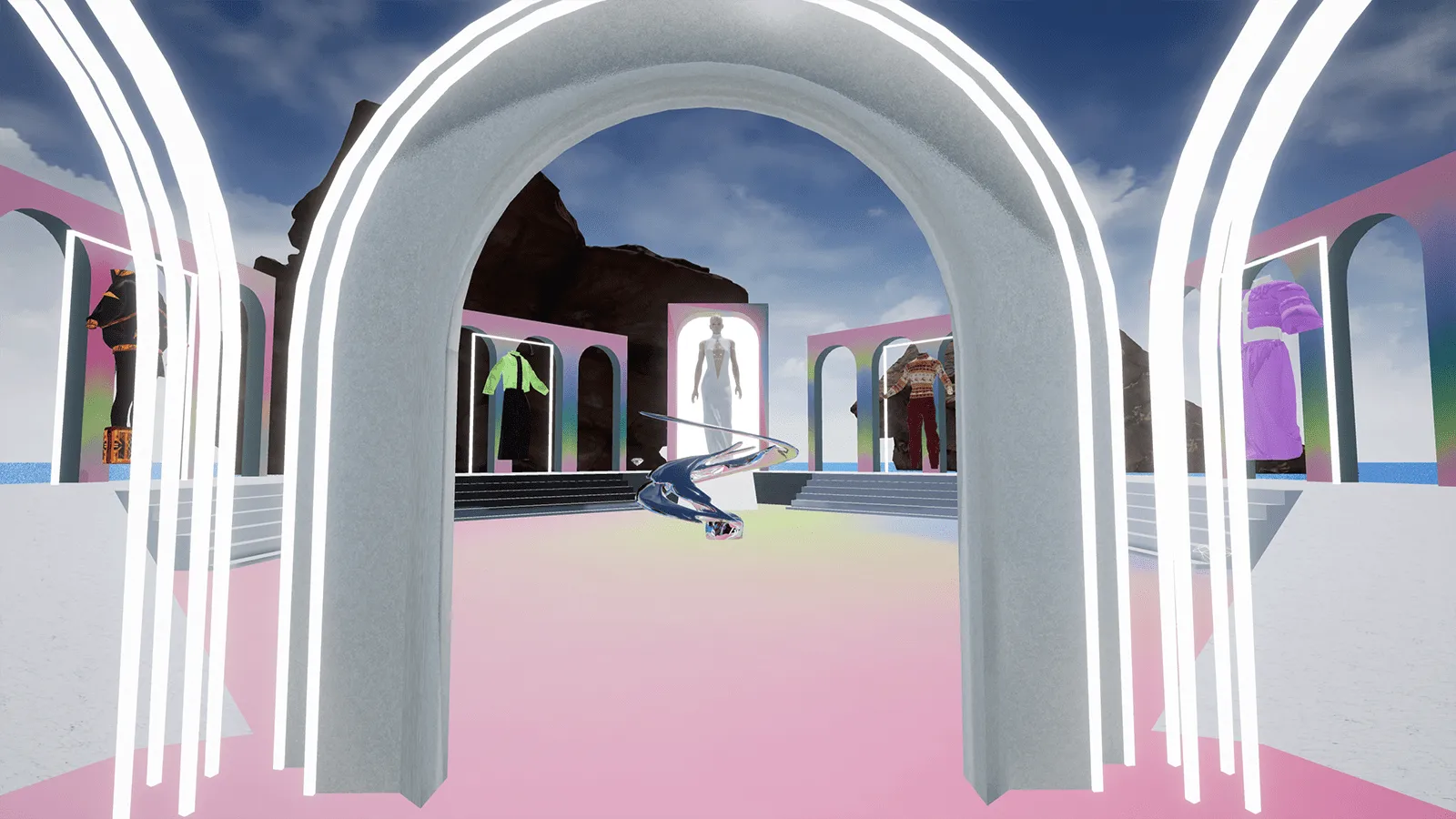
Persistent spaces built in Unreal or Unity — showrooms, event venues, training environments — with optional on-chain ownership of items. The world has to be worth visiting before the ledger matters, so we build it as a product first.
(Usual stack)
- 01Solidity on EVM chains
- 02Foundry and Hardhat
- 03OpenZeppelin contracts
- 04viem, ethers.js, wagmi
- 05WalletConnect and Safe
- 06IPFS, Arweave, Pinata
- 07The Graph for indexing
- 08Slither and Echidna
- 09Hyperledger Fabric for permissioned networks
- 10Unreal Engine and Unity for worlds
(How we work)
How the work runs
Every engagement is scoped in phases, priced per phase, and reviewed with you at the end of each one.
-
01
Discovery
We map the problem, the systems around it and what a good outcome looks like, then scope the work in phases you can stop after.
-
02
Design
Flows, architecture and interfaces agreed before anyone writes production code.
-
03
Build
Two-week increments, a working environment you can open, and a demo at the end of each one.
-
04
Testing
Functional, performance, security and accessibility checks run through the build, not bolted on at the end.
-
05
Launch
Deployment, monitoring, documentation and the handover your team needs to run it.
-
06
Support
Fixes, updates and the next set of features, at an agreed monthly capacity.
(Why Team of Keys)
How we reduce the risk in blockchain development
Contracts fail publicly and permanently. The habits below exist because there is no quiet hotfix on a public chain.
-
01
We start by trying to talk you out of it
Discovery tests the premise: who are the distrusting parties, and what happens if one of them edits the record? No credible answer means no chain, and you keep the analysis either way.
-
02
Testnet, fork, then mainnet
Every contract runs against a forked mainnet with real balances and real liquidity conditions before deployment. Gas costs and failure modes are measured, not estimated from a whitepaper.
-
03
Key handling written down
Deployer keys, admin roles and pause switches are documented with named holders and a recovery procedure. Most losses we read about are operational rather than cryptographic.
-
04
Off-chain where it belongs
Personal data, large files and anything that may need deleting stay off the ledger. Storing a hash preserves the proof without creating a permanent record you cannot legally erase.
-
05
No financial promises
We are engineers. Investment, tax and securities questions go to your advisers, and nothing we build comes with a claim about value, returns or liquidity.
(Related)
More in emerging tech
- 01 Emerging technology Emerging technology services for connected devices, blockchain, immersive worlds and ESG…
- 02 Internet of Things IoT development covering firmware, gateways, MQTT and LoRaWAN connectivity, over-the-air…
- 03 Sustainability & ESG ESG software: emissions and energy data collection, supplier questionnaires, reporting to…

(FAQ)
Questions, answered
Often not. The test is simple: name the parties who must share a record and do not trust each other to hold it. If they are all inside one company, a database with a proper audit log is cheaper, faster and far easier to change. When the test passes — multi-party supply chains, shared registries, bearer assets — a chain earns its cost.
A single well-scoped contract with tests and a front end sits in the range of a normal application phase. Costs climb with custody complexity, the number of integrations and the audit you need. Third-party audit fees are paid to the audit firm directly and quoted separately, since they depend on contract size.
We prepare the code, tests, documentation and threat model, then an independent security firm reviews it. Findings come back ranked by severity; we fix them and the firm re-checks. Budget two to six weeks depending on the queue and the contract. An audit reduces risk — it never removes it.
It depends on who your users are and what they pay in fees. Ethereum mainnet for assets that must sit where liquidity and tooling are deepest, an L2 such as Base, Arbitrum or Polygon when per-transaction cost matters, and a permissioned Hyperledger Fabric network when participants are known businesses rather than the public.
We can build and test the contracts and the minting interface. Structuring an offering, marketing it or advising on whether it is a regulated instrument is work for your lawyers and financial advisers. We do not give investment advice and we do not make claims about what anything will be worth.
(Global presence)
Nine countries, one studio behind them.
Every project is designed, built and shipped from one studio.
Turn the globe, or pick a country to see what we deliver there.
NoidaDrag to turn
Studio · Noida, India · --:--
(Next step)
Bring us the record several parties need to share
Describe who is involved and what they disagree about today. You get a straight answer on whether this needs a chain, and a phase plan if it does.
START